
English| EUR
Suggested for you
More currencies
Choose a language
Zion National Park allows bicycles on paved roads and one designated trail, but the majority of the park's famous hiking routes remain off-limits to wheels. Understanding where you can ride—and where you risk a citation—shapes how you plan a cycling visit to one of Utah's most regulated landscapes.
Quick answer
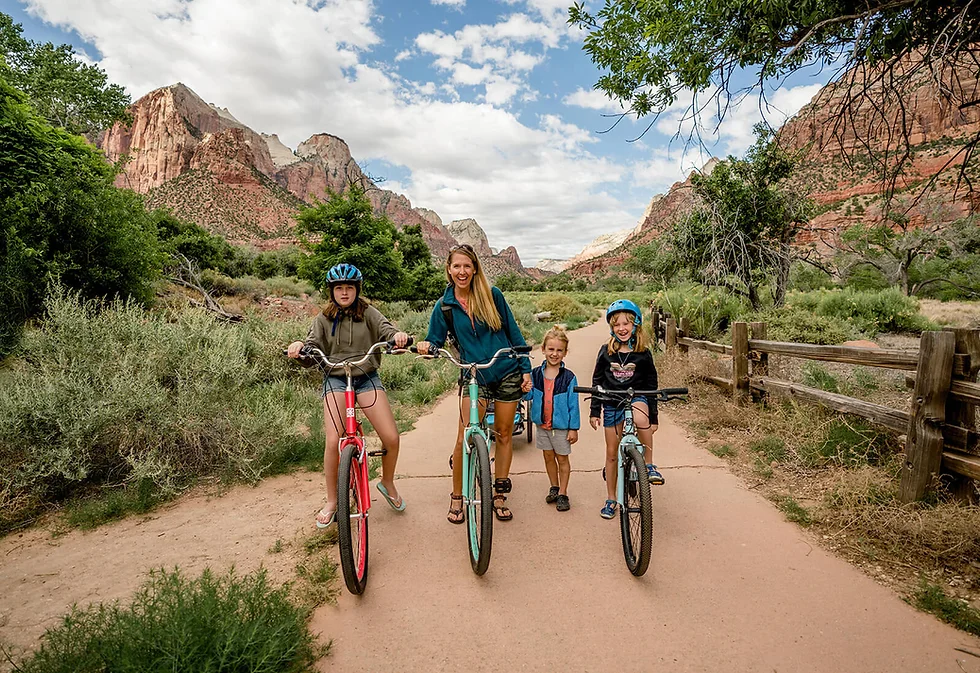
Yes, you can bike in Zion on all paved park roads and the Pa'rus Trail, the only multi-use path open to cyclists year-round. Bicycles are prohibited on all other trails, including Angels Landing, The Narrows, and every dirt or stone footpath within park boundaries. When the Zion Canyon Scenic Drive closes to private vehicles during shuttle season, it becomes one of the most accessible and scenic cycling corridors in the American Southwest.
The Pa'rus Trail remains the only footpath in Zion National Park where bicycles are explicitly welcome. This 3.5-mile paved corridor follows the Virgin River from the South Campground to Canyon Junction, threading cottonwood groves and offering unobstructed views of the Watchman and the Court of the Patriarchs. Every other named trail in the park—Angels Landing, Emerald Pools, Observation Point, Hidden Canyon—bans bikes outright, and rangers enforce the restriction with fines that start at two hundred dollars. Beyond the Pa'rus Trail, cycling in Zion national park is governed by road access rather than trail designation. The Zion Canyon Scenic Drive, which runs seven miles from Canyon Junction to the Temple of Sinawava, closes to private motor vehicles from late February through November, leaving the corridor open to shuttle buses, service vehicles, and bicycles. During that window, riders share the road with pedestrians and shuttles, climbing gradual switchbacks past Zion Lodge, the Grotto, and Weeping Rock. The road surface is smooth asphalt, the grade rarely exceeds five percent, and the lack of car traffic transforms the canyon floor into a de facto bike route. Outside shuttle season, the Scenic Drive reopens to private vehicles, and cyclists must contend with motorhomes and sedans on a narrow two-lane road with minimal shoulder. The Zion-Mount Carmel Highway, which connects the east entrance to the main canyon, remains open to cars year-round and presents a different challenge. The 24-mile stretch climbs through a series of switchbacks and tunnels carved into Navajo sandstone, with the longest tunnel spanning 1.1 miles and prohibiting bicycles entirely. Cyclists who attempt the highway must either arrange vehicle transport through the tunnel or ride the long exterior route via the park's northern boundary. Electric bikes are permitted on the same routes as traditional bicycles, provided they meet the park's Class 1 and Class 2 e-bike standards—pedal-assist only, no throttle-only models, and a maximum assisted speed of twenty miles per hour. Bike rentals are available in Springdale, the gateway town one mile south of the park entrance at 1 Zion Park Blvd. Shops stock cruisers, mountain bikes, and e-bikes, and most open by seven in the morning to accommodate early canyon rides. Riders who arrive before eight secure the coolest temperatures and the least shuttle congestion, particularly in summer when afternoon heat regularly exceeds one hundred degrees Fahrenheit on exposed pavement.
“The Pa'rus Trail remains the only footpath in Zion National Park where bicycles are explicitly welcome.”
Biking Zion Canyon Scenic Drive requires entering through the park entrance, understanding where bicycles share the road with shuttles, and following right-of-way rules. The full 6-mile ride from the Canyon Junction to the Temple of Sinawava turnaround takes 45–90 minutes depending on pace and stops.
Pay the entrance fee at the booth or display your pass, then proceed to the Canyon Junction where the Scenic Drive begins. Bicycles are allowed on all paved roads within the park.
Stay as far right as practicable on the Scenic Drive and use the full lane only when necessary for safety. Many cyclists mistakenly hug the shoulder too tightly near blind curves, which reduces visibility to shuttle drivers.
Shuttles have the right of way at numbered stops along the route; move to the shoulder and allow them to pull off completely before passing. Failing to yield is the most common violation cited by rangers.
The Zion-Mount Carmel Tunnel on the east side does not permit bicycles inside; walk your bike through on the pedestrian walkway. The Scenic Drive itself has no tunnels.
The paved Scenic Drive ends at the final shuttle stop where the Riverside Walk trailhead begins. Bicycles are not permitted on the Riverside Walk or any unpaved trails.
Retrace the Scenic Drive back to Canyon Junction and exit through the same gate you entered; there is no separate bike exit or one-way restriction on the road.
Zion National Park is accessed via Zion Park Blvd in Springdale. Visitors bringing their own bicycles typically approach via the South Entrance, where the Zion Canyon Visitor Center serves as the primary staging area.
Follow Zion Park Blvd to 1 Zion Park Blvd
Springdale Shuttle to Zion Canyon Village
Park at Zion Canyon Visitor Center
To secure limited parking at the visitor center, aim for the 06:00–08:00 arrival window. Arriving early ensures you can unload your equipment and access the canyon before peak heat and congestion begin.
The most effective way to experience Zion by bike is to utilize the best arrival window of 06:00–08:00. This timing allows cyclists to avoid peak shuttle traffic and the high temperatures common in the canyon floor.
Mild temperatures 60°F–80°F
Wildflowers bloom and temperatures remain comfortable for long rides.
Hot temperatures 90°F–100°F+
Heat restricts afternoon activity; early morning is essential.
Cooler temperatures 60°F–85°F
Stable weather and clear skies make this a primary biking season.
—
Mid-week rides offer the quietest access to the Zion Canyon Scenic Drive.
Verdict: For the best conditions, aim for weekday mornings in April or October, ensuring arrival between 06:00 and 08:00 to secure parking and beat the heat.
Zion enforces specific cycling rules to protect both the park's shuttle operations and the canyon's fragile ecosystem. Following these guidelines keeps trails open and ensures safe coexistence with pedestrians and wildlife.
Zion National Park is open to visitors throughout the week. The park maintains consistent operating hours every day of the year.
Everything you need to know about can you bike in zion
Yes, visitors can bike in Zion National Park along the Zion Canyon Scenic Drive and the Pa'rus Trail. While cycling is a popular way to explore, please stay aware of your surroundings and park regulations. Many visitors choose to rent equipment to enhance their experience of the sandstone cliffs.
Yes, pedal-assist electric bicycles are permitted on the same roads and trails as traditional bicycles. Using an e-bike allows riders to navigate the canyon grades with more ease. Ensure your device meets local NPS requirements for e-bike classification.
The Zion Canyon Scenic Drive offers the best views of major landmarks like the Court of the Patriarchs and the Virgin River. The Pa'rus Trail is also a preferred route for those seeking paved paths away from heavy vehicle traffic. Planning your route helps you maximize your time among the canyon walls.
The scenic drive has some inclines, but it is generally manageable for most cyclists who are comfortable on paved roads. Because shuttle buses and permitted vehicles share the road, staying alert and riding single file is essential. Always maintain control of your bike when descending hills.
Vehicle traffic is managed by a shuttle system, but cyclists still share the road with park shuttles and authorized vehicles. Riding early in the day is the best way to minimize encounters with traffic. You will find that cars are generally cautious, but safety remains your personal responsibility.
Families often enjoy the Pa'rus Trail, which is relatively flat and separated from the main road. However, children should be supervised closely, especially when cycling on routes shared with shuttle buses. Always prioritize paths that are designated for multi-use or non-motorized travel.
Cyclists must follow all traffic laws, including riding with the flow of traffic and using lights at night. You are required to yield to pedestrians and obey all posted speed limits. Respecting these guidelines ensures that everyone can enjoy the park safely.
The standard entrance fee for the park is 35 USD per vehicle, which covers all passengers in your party. If you are entering by bicycle, specific fee structures may apply, so check the official park website for the latest updates. Using your pass allows access to the park's shuttle system as well.